Wood, Plastic, and Wire Chairs Graphic
The Eames Office designed this one-sided flyer for Herman Miller in 1952. It was sent out to customers folded in a letter-sized envelope.


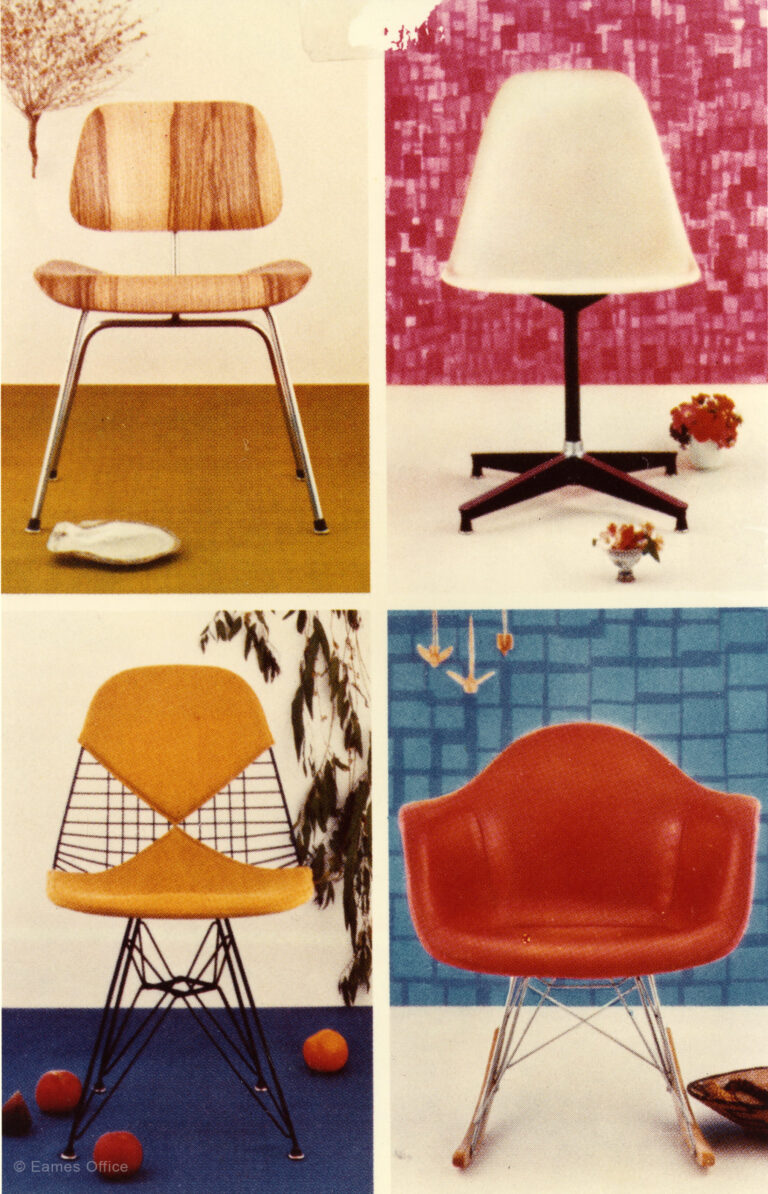
The Eames Office designed this one-sided flyer for Herman Miller in 1952. It was sent out to customers folded in a letter-sized envelope.

When Charles and Ray Eames were working on bringing the Eames molded plastic side chairs to market, they faced so many challenges to make a durable side chair that they took the same form as the side chair and decided to produce it out of welded steel wires. The steel wires form a structure on…
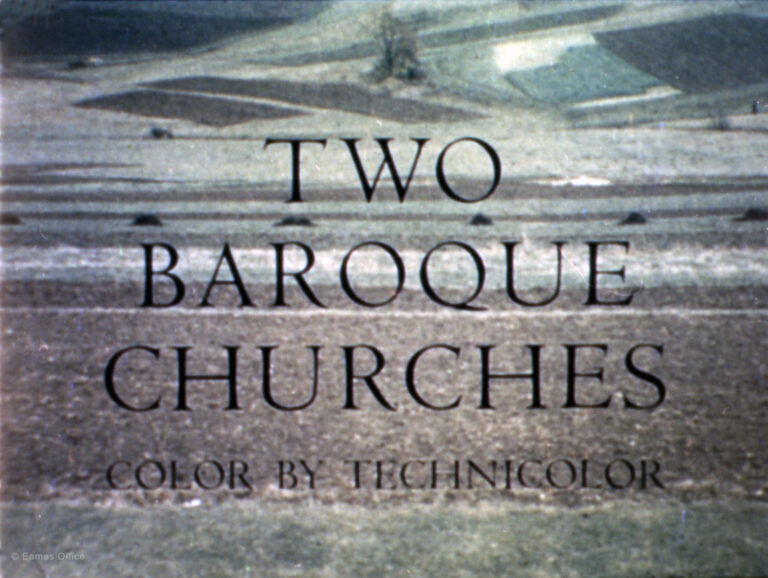
These two churches, Viersehnheiligen and Ottobeuren are rich examples of mid-18th-Century German Baroque, a time when music, literature, architecture and philosophy were unified. The film, rather than explaining the structure, attempts to express the feeling of what German Baroque was, and what gave it such great style. The music is 18th-Century, played on 18th-Century organs….
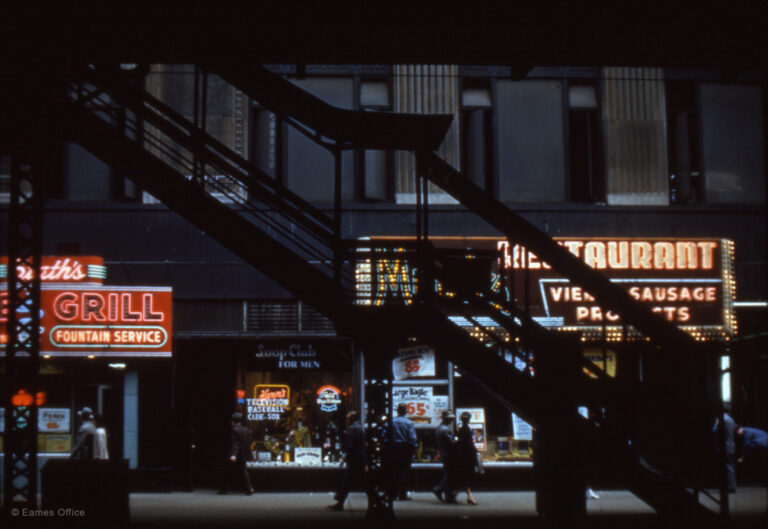
Four two- and three-screen slide shows were assembled for a course Charles gave to beginning architecture students at the University of California, Berkeley, in 1953 and 1954. Townscape, a three-screen slide show, is composed of close-up details of urban architecture—storefronts, road signs, street markings, graphics, manhole covers, and overhead wires. A soundtrack of city noises—snatches…
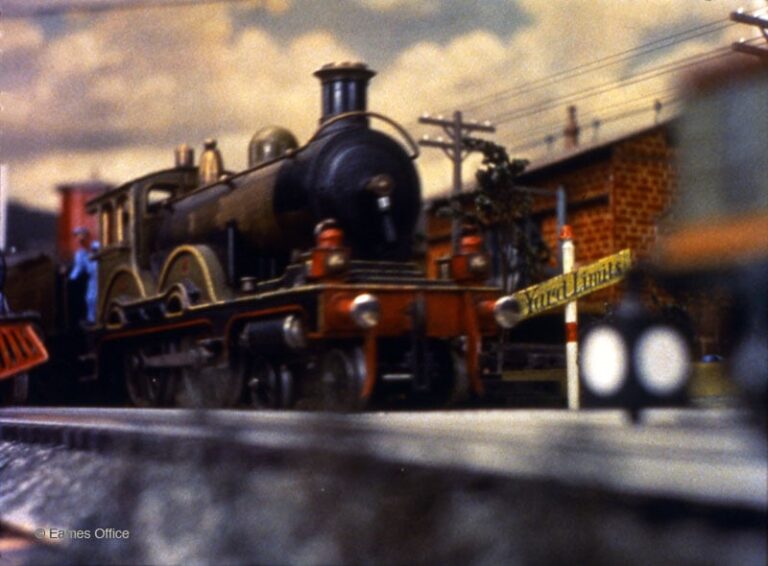
Stop motion animation of toys and objects, including trains, cars, and wind-up figures, are used to tell the story of a journey. The vehicles, each laden with figures, travel from the railyard and roadhouse through the countryside and villages to a train station. The trains, toy people, backgrounds, buildings and other props were pushed and…
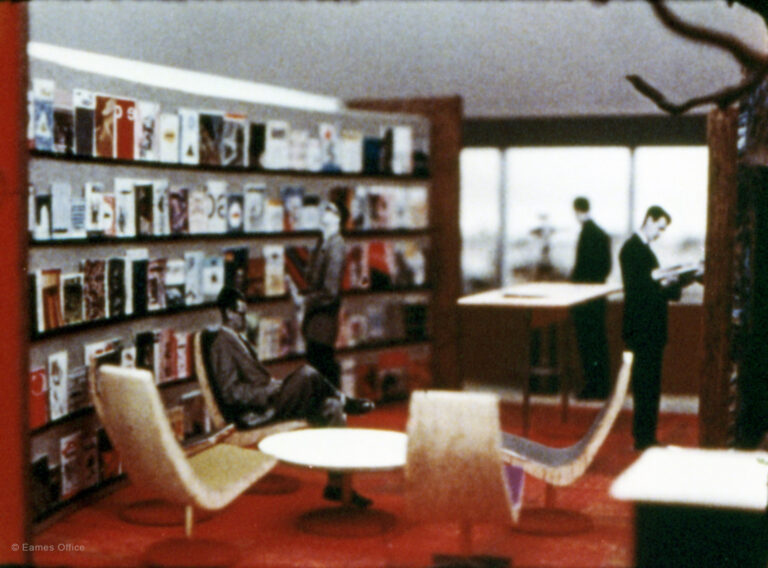
Made by the Eameses to present their interior design concepts, including new furniture designs for the then-upcoming Time & Life Building lobbies. The film outlines the lobby’s basic functions and key features, using both live-action and animation. The furniture designed for this lobby can be found in many permanent museum collections, and seven decades after…
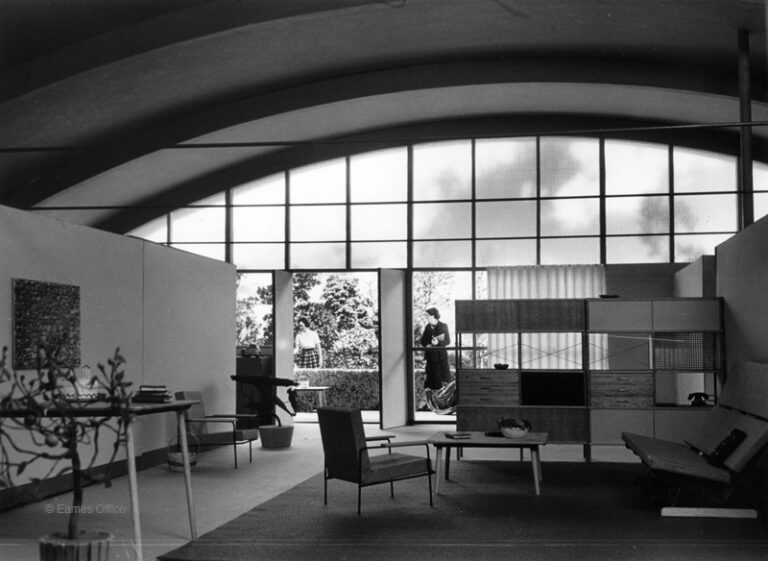
In 1951, the Kwikset Lock Company of Anaheim, California, commissioned the Eames Office to design a low-cost, prefabricated house. Charles and Ray planned its construction with off-the-shelf parts and hardware, allowing Kwikset to manufacture the house in high volumes as a “kit home.” This mass-produced quality stemmed from the Case Study Program’s idea of normalizing…
Was produced for the IBM Corporation to be shown in its pavilion at the 1958 Brussels World’s Fair. Intended as an introduction to the electronic computer, the film uses animation to depict the computer as the culmination of centuries of tools and systems man has developed to process information. For the information Machine film Charles…

The Little Toy came with modular, square, and triangular cardboard panels in a range of bright, solid colors as well as silk-screened and geometric patterns. It also included wireframes and small pieces of colored bell wire to connect the shapes and frames. The product reflected the Eameses’ interest in modular space and their love for…
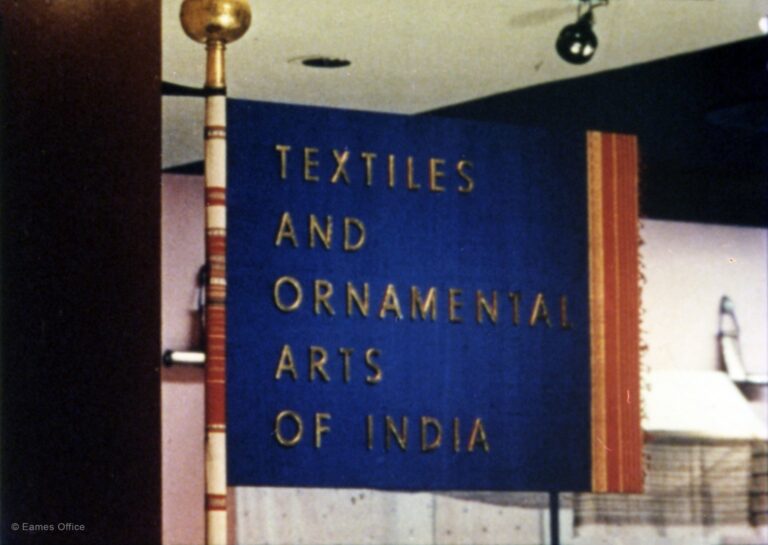
Rarely has there been available, on film, a record of an exhibition such as the great East Indian exhibition collected and shown by the Museum of Modern Art in New York in 1955. Here is the color, sound, texture, poetry, and rhythm of a people rich in tradition, and in a philosophy that touches every…
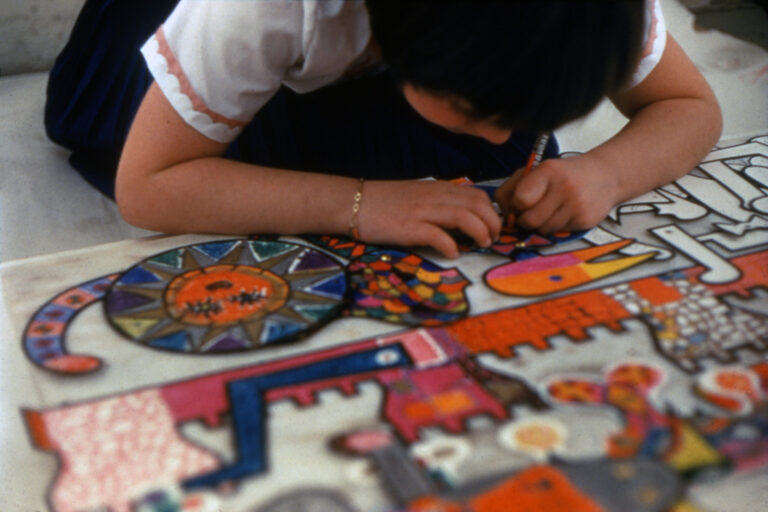
The purpose of The Coloring Toy is to provide a jet assist into a world of color, drawing, shapes, and play. Each box contains eight die-cut panels, 16 premium crayons, and butterfly clips. The colorful panels have a variety of outlines die cut shapes to color, punch out, and attach. Originally designed for and manufactured…
Produced to assist Eames’ friend, architect Eero Saarinen, in presenting his innovative concepts for the new Dulles Airport near Washington DC, the film demonstrates the advantages of the unique design for both the airlines and the public, focusing on increased airport efficiency and the eliminate the passenger’s long walks with heavy luggage. 9 minutes, 30…
