
Home » 1950s » Page 2

1950s

  • STACKING CHAIR

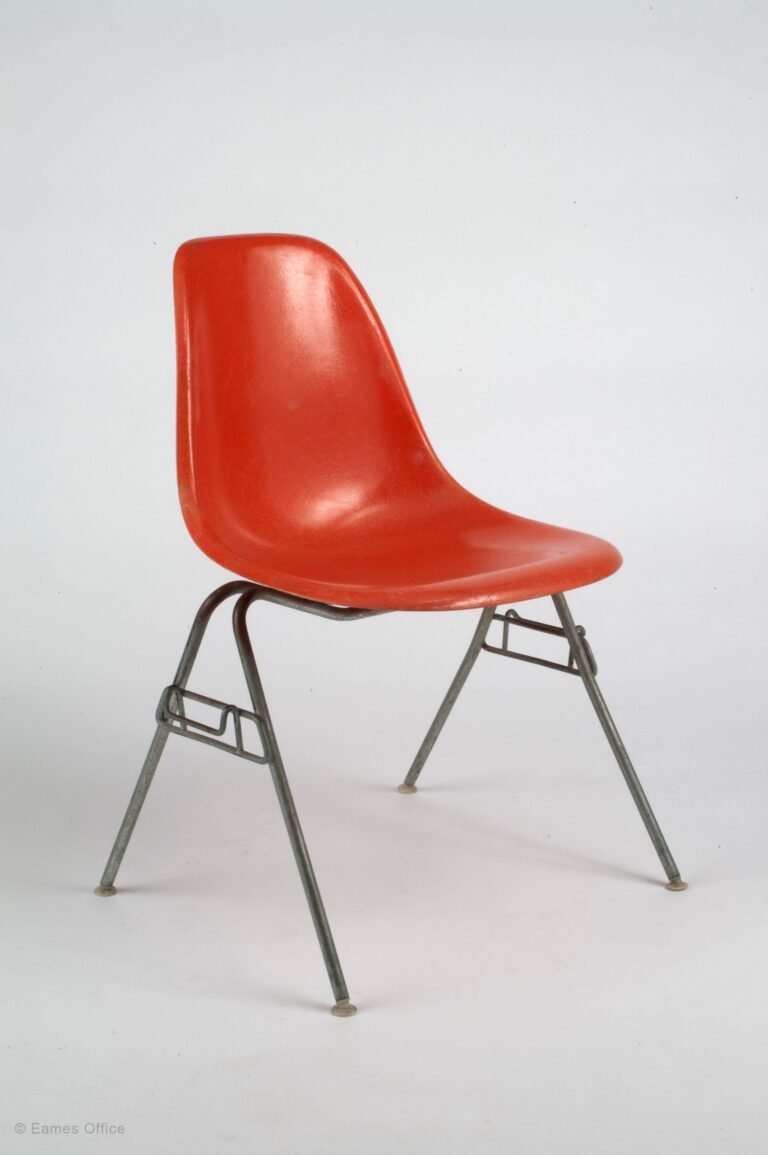
    The Eameses created the Stacking and Ganging Side Chair in response to demands for a lightweight, stacking chair that could be set up quickly for seating large groups and, at the same time, be stored easily. The chairs can be ganged in straight or curved rows. When stacked, the side hooks support and separate the seats…
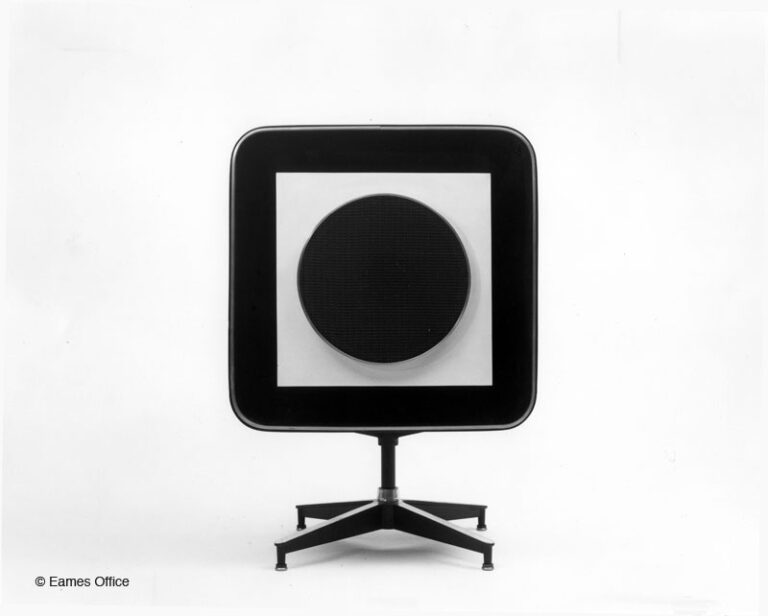
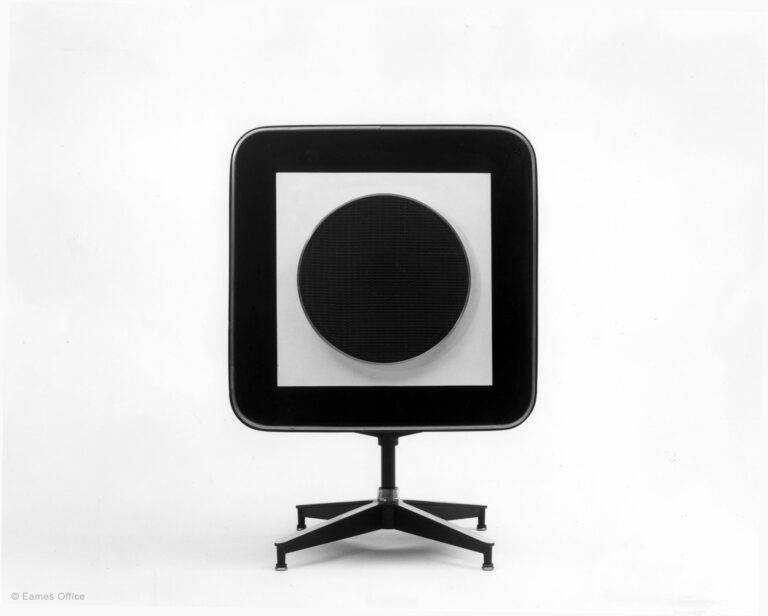
  • Stephens Tru-Sonic Speakers

    1957 Stephens Tru-Sonic, Inc., based in Culver City, California, had a reputation for high quality audio products. In 1957, Bert Berlant and Bernard D. Cirlin took over the company. The two were friends with Charles and Ray, and drew upon this friendship to enlist the Eames Office in the design of new loudspeaker enclosures. These…

  • Stephens Speaker

    Stephens Trusonic, Inc., makers of high-fidelity audio equipment, asked Charles to design the enclosures for their products. The Eames Office developed baffles within the speakers which amplified and also enhanced the audio. They also constructed four designs for enclosures that incorporated the plywood-molding techniques developed for the early chairs and the Case Goods system. The…

  • Solar Do-Nothing Machine

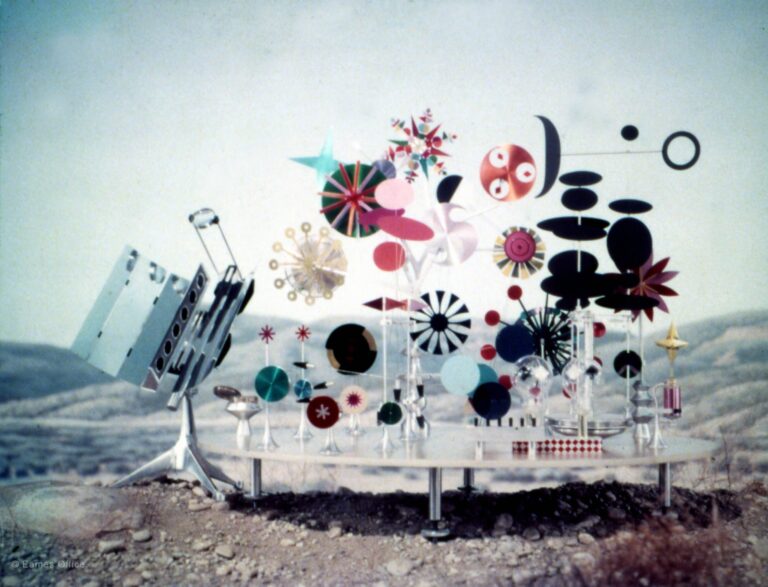
    In 1957, the Aluminum Company of America invited the Eames Office to participate in an advertising initiative called the Forecast Program. As a result, Charles and Ray Eames created one of the first usages of solar electricity. They called the device, The Solar Do-Nothing Machine.  The Forecast Program invited designers across the country to submit…

  • Soft Seating Graphic

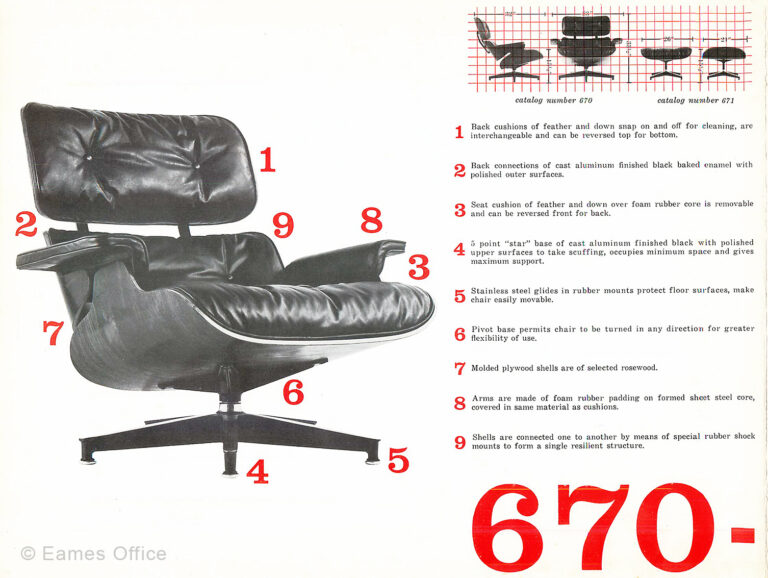
    In 1956, when the Eames Lounge Chair and Ottoman were introduced, the Eames Office created this promotional brochure for Herman Miller. Instead of promoting its celebrated appearance, Charles and Ray focused on the practical aspects of the Eames Lounge Chair & Ottoman, which they numbered, 1 through 9.

  • Seascape

    Four two- and three-screen slide shows were assembled for a course Charles gave to beginning architecture students at the University of California, Berkeley, in 1953 and 1954. Seascape is a two-screen show of images of the sea and shore shot along the California coast, accompanied by recorded sounds of the wind and the sea.

  • Railroad

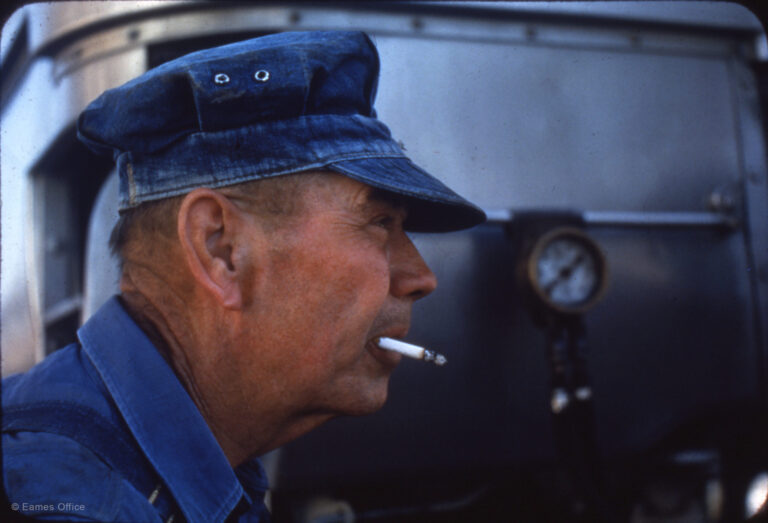
    Four two- and three-screen slide shows were assembled for a course Charles gave to beginning architecture students at the University of California, Berkeley, in 1953 and 1954. Railroad is a two-screen presentation of images of the railroad featuring close-ups of trains and cars, tracks, railroad ties, conductors and other railroad workers, train equipment and graphics….

  • Revell Toy House

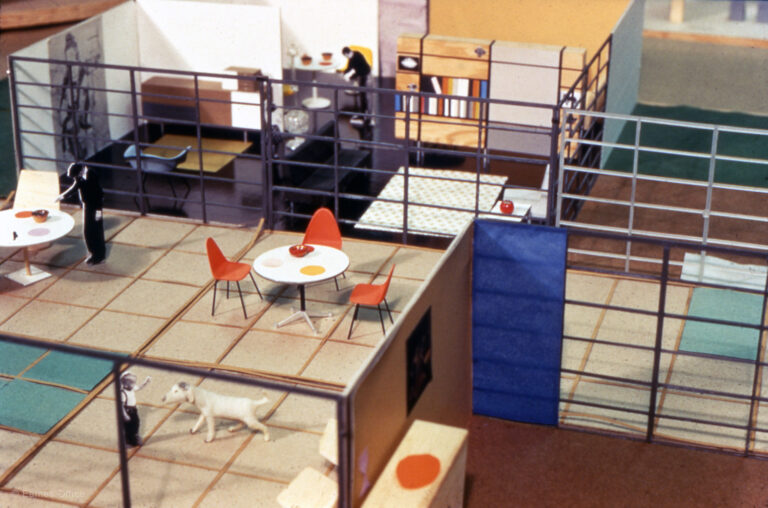
    The Eames Office designed a model house kit in a ¾ -inch scale, wholly furnished with miniature Eames furniture and accessories, for the toy manufacturer Revell Company in the late 1950s. The model house kit included a system of modular units of grids and panels made from injection-molded plastic. Charles and Ray designed the rooms…

  • S-73 (Sofa Compact)

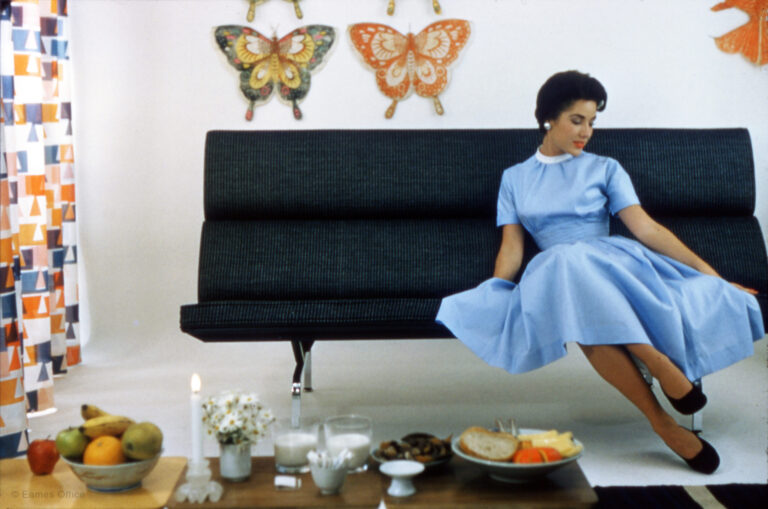
    This film traces the design development of the Eames Sofa Compact, which folds for easy flat-pack shipping. The film, one of the first Charles and Ray made for Herman Miller, starts in a rail yard, where we discover that volume is more expensive than weight. This fact led to the Eames’s firm resolve to flat…

  • Philip Dunne Office

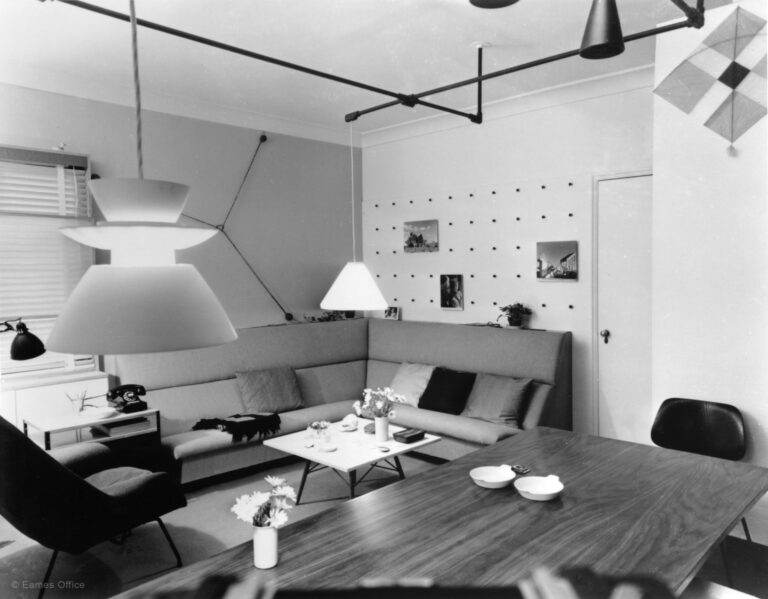
    The head screenplay writer at Twentieth Century Fox, Philip Dunne, asked Charles and Ray to redesign the interior of his office in the “Old Writers Building” in 1952. Dunne wanted the L-shaped interior of his otherwise English cottage-inspired office building to include a modern-style conference area and small seating arrangement. Charles and Ray constructed a…

  • Philip Dunne Office

    The head screenplay writer at Twentieth Century Fox, Philip Dunne, asked Charles and Ray to redesign the interior of his office in the “Old Writers Building” in 1952. Dunne wanted the L-shaped interior of his otherwise English cottage-inspired office building to include a modern-style conference area and small seating arrangement. Charles and Ray constructed a…

  • Parade

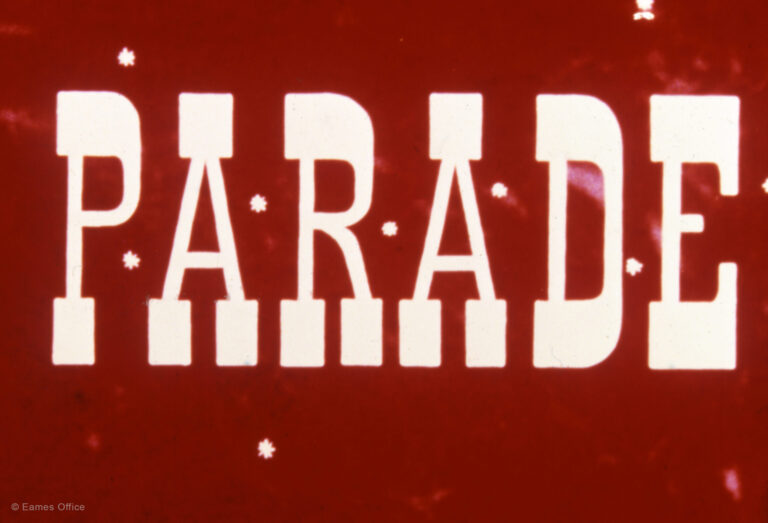
    A live action pageant of mechanical toys, animals, puppets, cars, lead soldiers, and dolls—all set in motion. Toy buildings and photographic or painted images of city streets serve as backdrops. Festive elements from circuses, carnivals, and holiday parades are combined into an exuberant procession set to the music of John Philip Sousa. As the film…