
Home » 1950s » Page 6

1950s

  • Billy Wilder House

    Two of Charles and Ray’s companions, film director Billy Wilder and his actress wife Audrey, commissioned the Eameses to design a home in Beverly Hills, California.  Billy Wilder House Planned just after the construction of the Eames House and the Entenza House in 1950, The Billy Wilder House boasted an extension of the Eames House’s design principles….
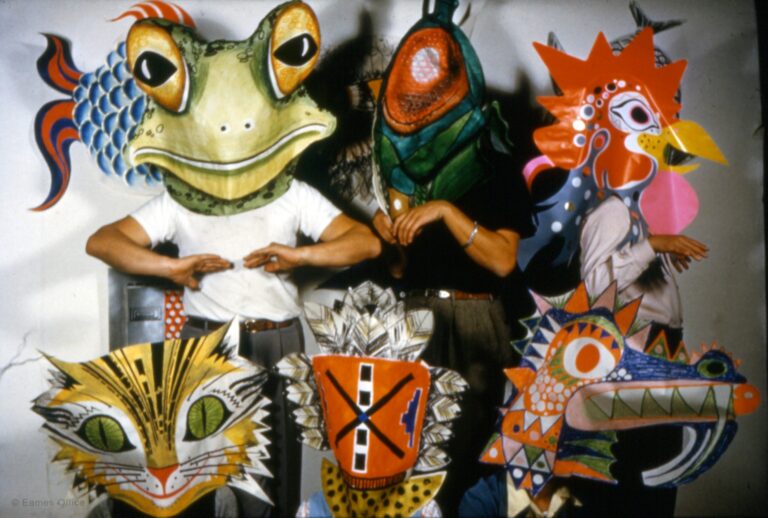
  • Toy Masks

    Charles said that the reason he and Ray began to design and make toys was simple: they wanted them for their grandchildren and the children of staff members and friends.  The very first toys designed by Charles and Ray for mass production were large head and body masks for children and adults. In the late…

  • DOWEL LEG TABLES

    Charles and Ray developed the Eames Dowel Leg Table as a product of their process of developing their molded plywood chairs. Starting in 1950, the dowel leg tables were available in two different sizes as dining and as card or extension tables, and in one size, square, as a coffee table. Long before flatpack furniture became…

  • MOLDED SHELL CHAIRS

    While there is no “Eames style” per se– they made furniture with curved forms and straight edges—and they used wood, plastic, wire, and aluminum, there is a remarkable consistency to the Eames approach to furniture design. In Charles’s own words, a “chair has essentially two parts, one, a surface to receive the body, and two,…

  • Traveling Boy

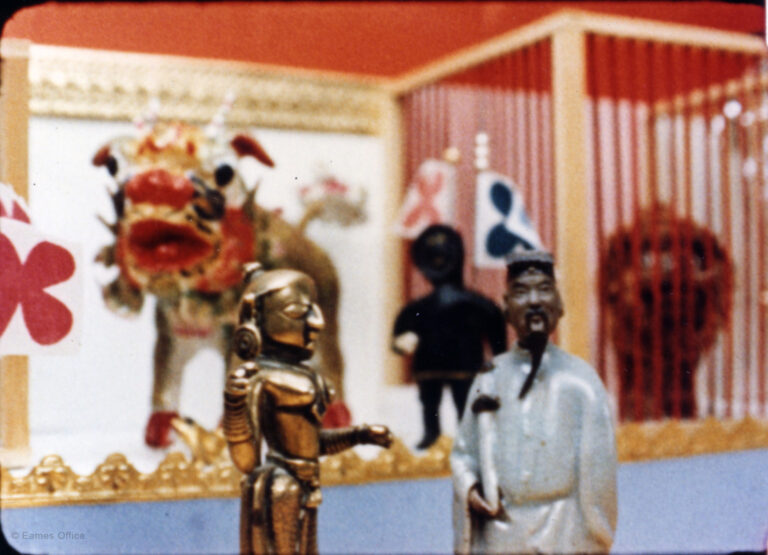
    With a cast consisting exclusively of toys, a Japanese windup boy carrying a suitcase has a series of encounters with other windup toys. Large numbers of toys that were used on circus posters and drawings by Saul Steinberg, share the limelight with Polish-made puppets bought in Chicago, toys from FAO Schwarz and from Chinatowns across…

  • Herman Miller Showroom

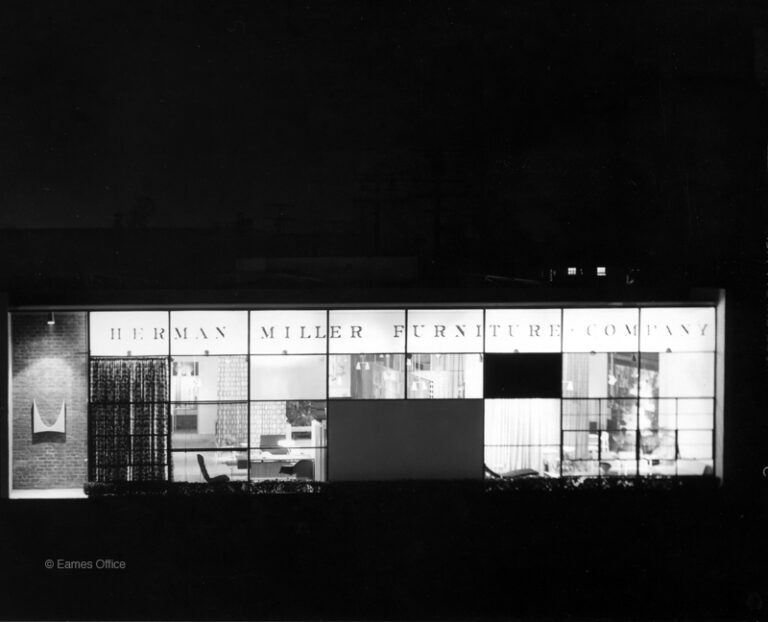
    Immediately after completing the Eames House and the Entenza House in California, the Eames Office designed the new Herman Miller Los Angeles showroom. Much like the two Case Study Houses of 1949 and 1950, the showroom’s architecture featured a large expanse of glass held together in a geometric pattern by a steel frame. Coinciding with…

  • ETR

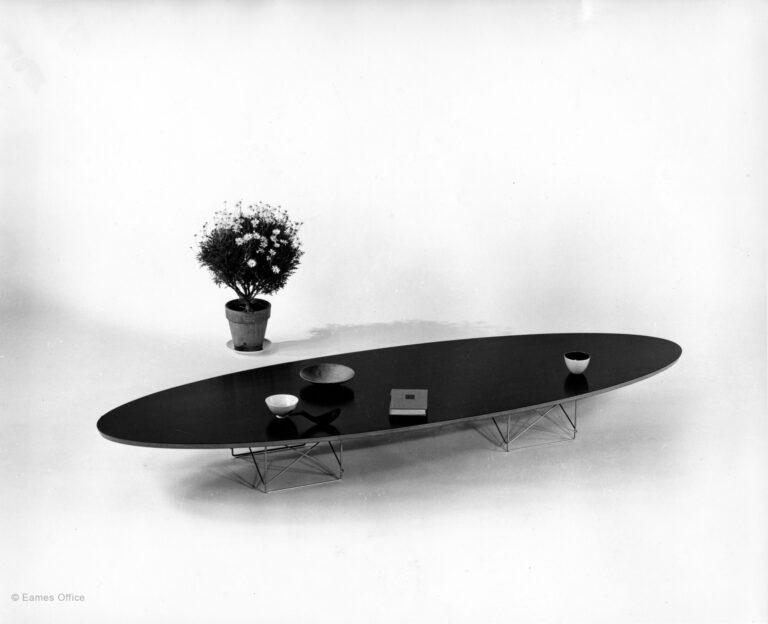
    In 1951, the Eameses took this wire table base structure one step further when they introduced the ETR, also known as the Elliptical Table, and to Eames enthusiasts as the “surfboard table.” Friends of Charles and Ray have suggested that they may have gotten the idea of the shape of the ETR from visits to…

  • The Toy

    People of all ages still love  The Toy  for its nearly limitless uses .  It’s perfect for tunnels and structures for play, towers, houses, and tents. You can use it as a theater set to stage a show, as party décor, shade from the sun, or even an airplane! The outside label reads: “Large. Colorful….

  • Upholstered Wire Chairs

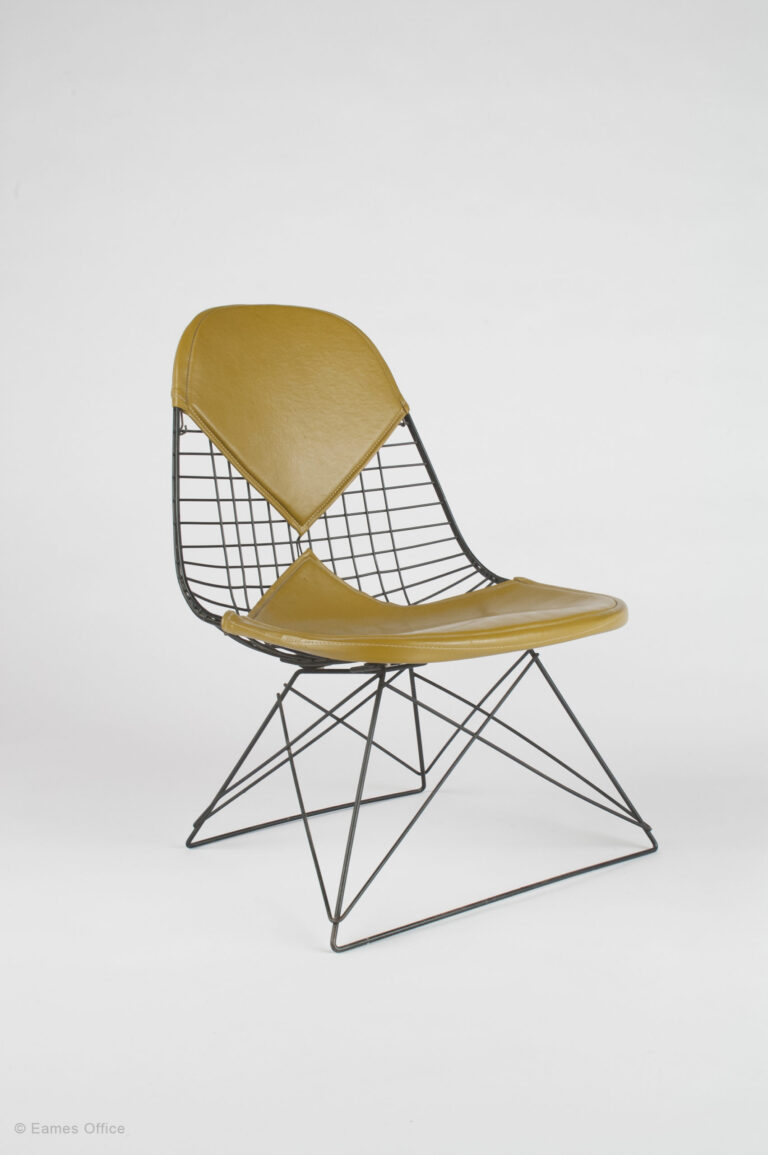
    When Charles and Ray Eames were working on bringing the Eames molded plastic side chairs to market, they faced so many challenges to make a durable side chair that they took the same form as the side chair and decided to produce it out of welded steel wires. The steel wires form a structure on…

  • EAMES STORAGE UNITS AND DESKS

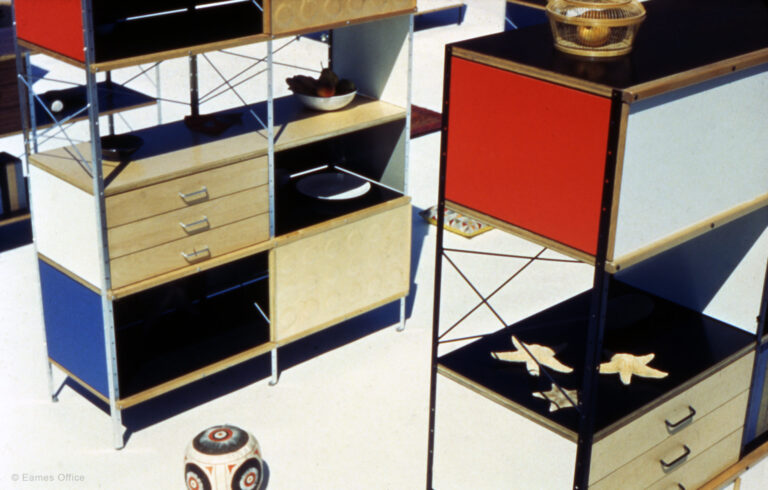
    The Eames storage units (ESU) and desks (EDU) use an ingenious and inventive construction system as simple and as openly engineered as a bridge.  Eames Storage Units and Desks The elements of the Eames Storage Units and Desks come together with a fine unforced logic, and the methods and mechanics and reasons are completely apparent…

  • EAMES STORAGE UNITS (ESU)

    The Eames storage units (ESU) use an ingenious and inventive system of construction as simple and as openly engineered as a bridge. The elements come together with a fine unforced logic, and the methods, mechanics, and reasons are completely apparent on the whole. Eames Storage Units The Eames Storage Units (ESU) have been designed in…