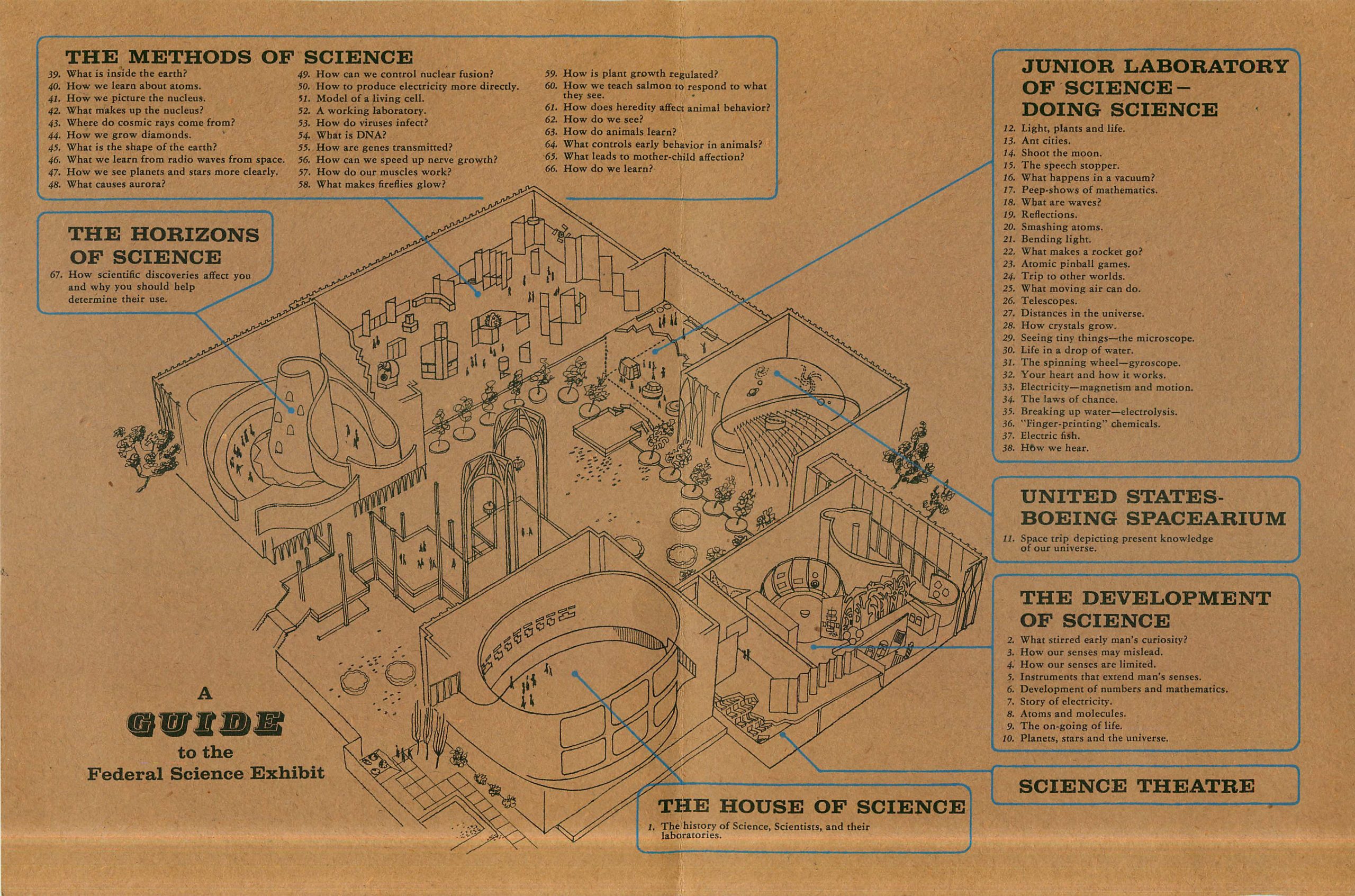

House of Science
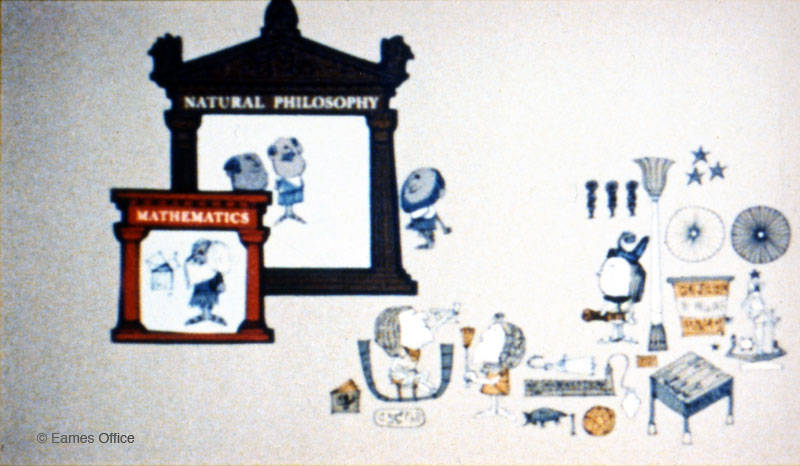
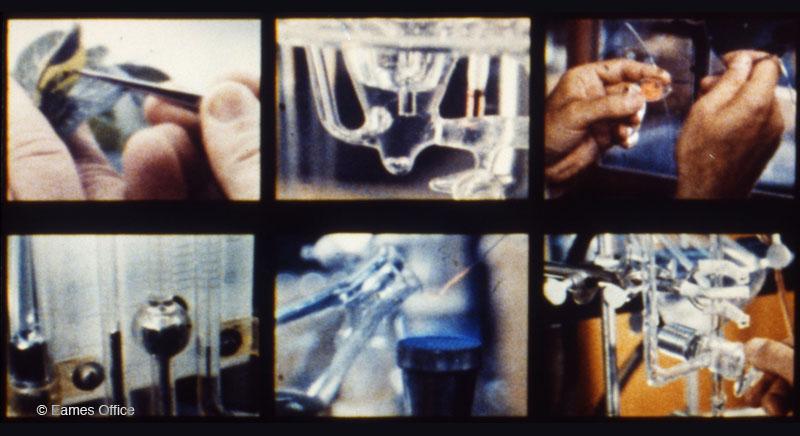
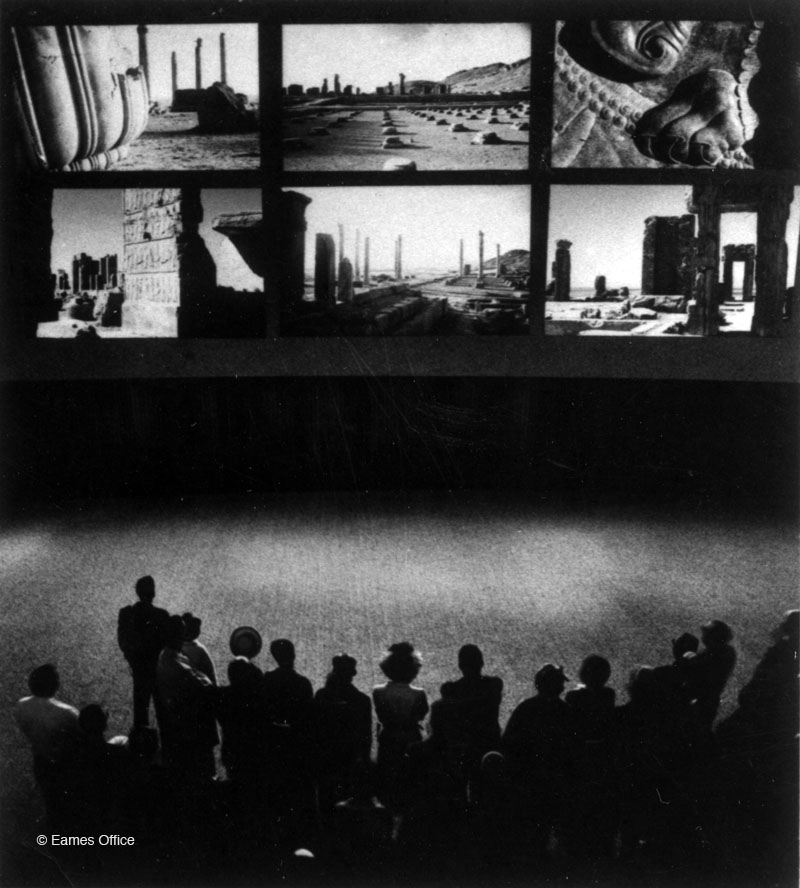
A multiscreen film of both animated and photographic sequences, designed to convey “the excitement, the diversity, and the richness of the scientific discipline.” As described by the narration, “Science is essentially an artistic or philosophical enterprise carried on for its own sake. In this, it is more akin to play than to work. But it is quite a sophisticated play in which the scientist views nature as a system of interlocking puzzles. He assumes that the puzzles have a solution, that they will be fair. He holds to a faith in the underlying order of the universe. His motivation is his fascination with the puzzle itself—his method a curious interplay between idea and experiment. His pleasures are those of any artist. High on the list of prerequisites for being a scientist is a quality that defines the rich human being as much as it does the man of science, that is, his ability and his desire to reach out with his mind and his imagination to something outside himself.”
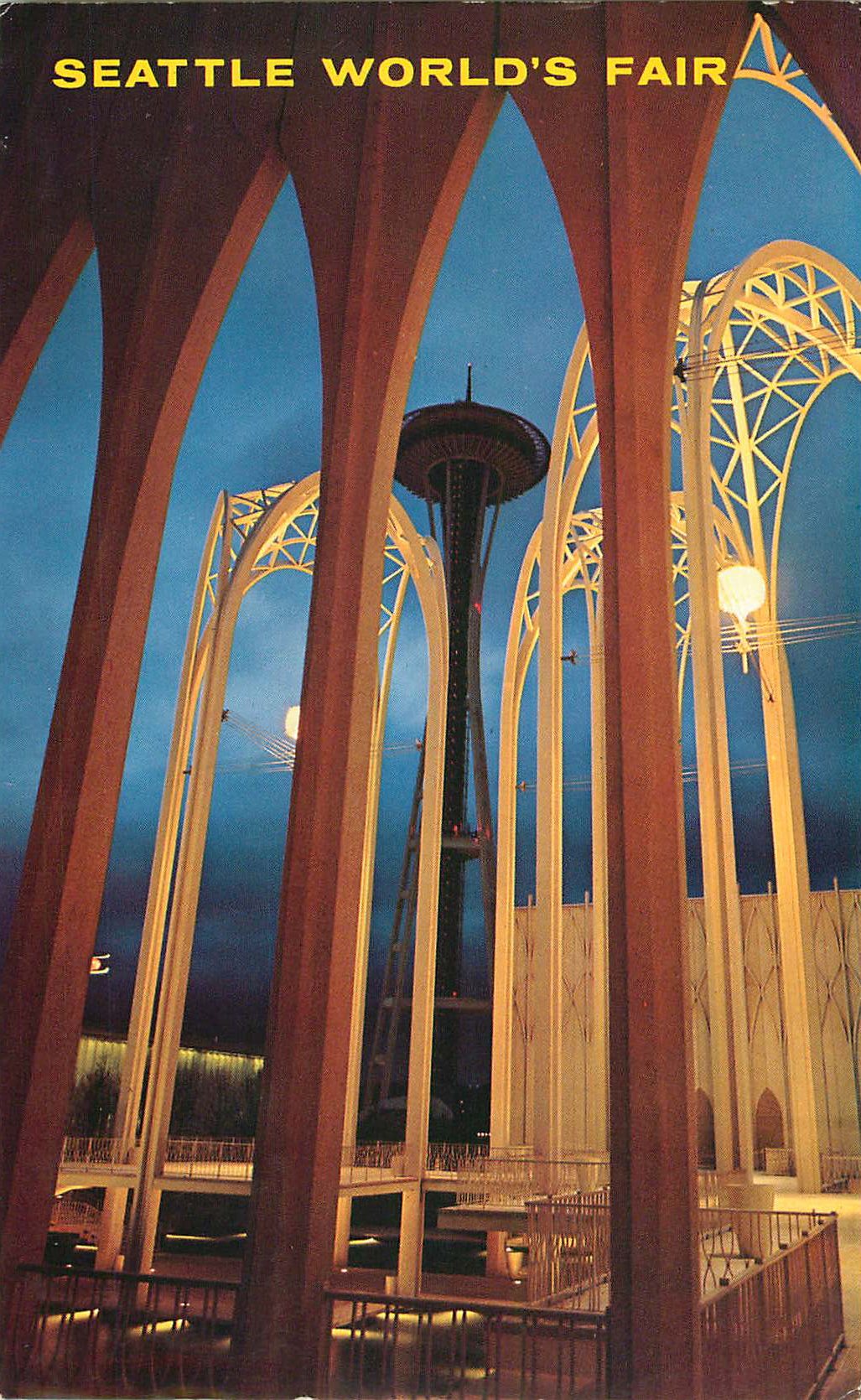
The Eame Office produced the House of Science multiscreen film presentation for the U.S. Department of State. They presented it at the United States Science Exhibit at the Century 21 World’s Fair in Seattle, Washington.
1962
In 1960, the U.S. Department of State asked the Eames Office to create a film for the United States Science Exhibit, which took place at the Century 21 World’s Fair in Seattle, Washington.
The Eameses’ multiscreen film presentation provided an introduction to the government’s five pavilions, each of which focused on a different aspect of science.
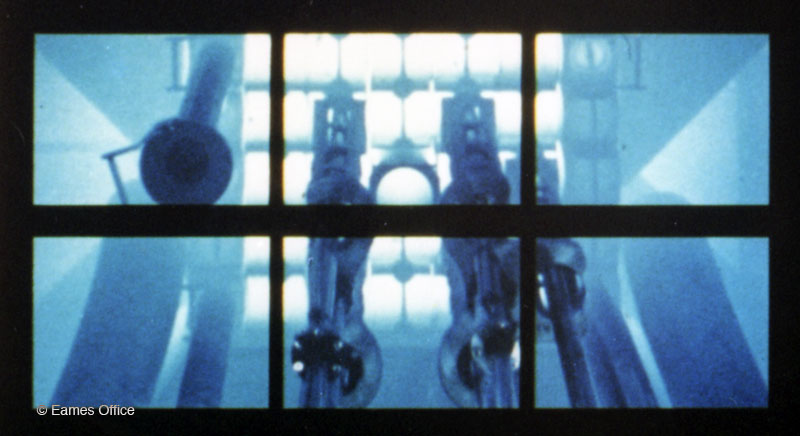
The Eames Office employed architectural structures to represent each discipline. As the sciences developed and became more specialized, the structures grew and divided, with the architecture changing in style to reflect historical progression. Eventually, the buildings stretched across all six screens.
The Eameses’ presentation conveyed a sense of “the excitement, the diversity, and the richness of the scientific discipline.”
The national magazine Saturday Review published this review of the film:
All the art at the Seattle World’s Fair is not in the vast Fine Arts Pavilion. Some distance away at the U.S. Science Exhibit, a remarkable fourteen-minute film, produced by Charles Eames with the assistance of his wife Ray, qualifies as creative art on a high level. In a specially designed oval room the visitor watches multiple images, cast from seven 35-millimeter motion picture projectors, unfold a dramatic prologue to the Science Exhibit (a project for which our government should be roundly applauded). The pictures, thrown on a large concave wall six images at a time, spotlight the complex and comprehensive world of modern science. Eames has actually invented a new cinematic technique expressly designed to combine many separate visual experiences at once. Varying his rhythm, perspective, and emphasis with lighting speed, he synchronizes six adjacent moving scenes into a powerful composite statement about science and scientists. Katherine Kuh, May 26, 1962