
Home » 1940s » Page 2

1940s

  • Circles

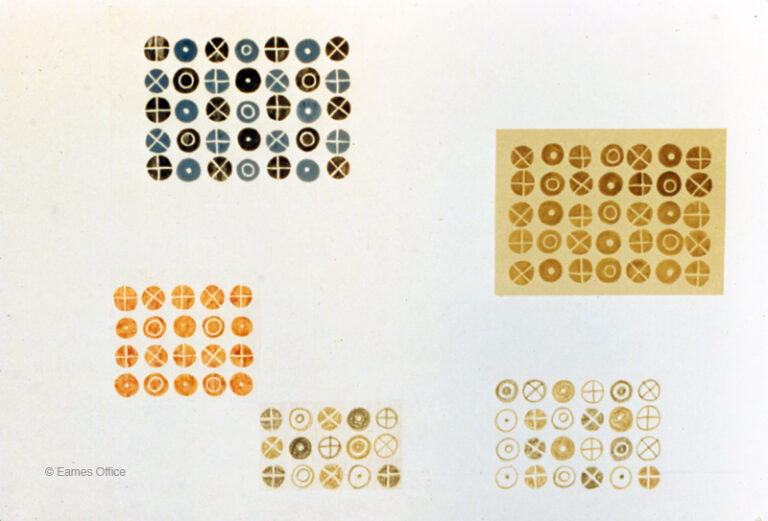
    In 1947, Charles and Ray separately entered The Competition for Printed Fabrics sponsored by the Museum of Modern Art. The museum’s Department of Industrial Design organized the contest with jurors including architect Marcel Breuer, the Managing Editor of ART NEWS, and directors of multiple MoMA departments. Out of nearly 2,500 entries, four winners and fifteen…

  • Radio Prototypes

    1946 After more than 70 years, the Eames Office has collaborated with Vitra to revive one of Charles and Ray’s designs for a compact radio. Encased in an elegant walnut cabinet and equipped with up-to-date technology by the British manufacturer REVO, the Eames Radio today bears witness to the designer couple’s unwavering belief in progress….

  • FOLDING TABLES

    There was an experimental Eames folding leg table with two u-shaped legs in the Eames show at the Museum of Modern Art in 1946, but it was unstable in practice, and very few were produced.  By 1947, the Eameses developed a more substantial folding leg table, building on the original concept, but this time with…

  • LA CHAISE

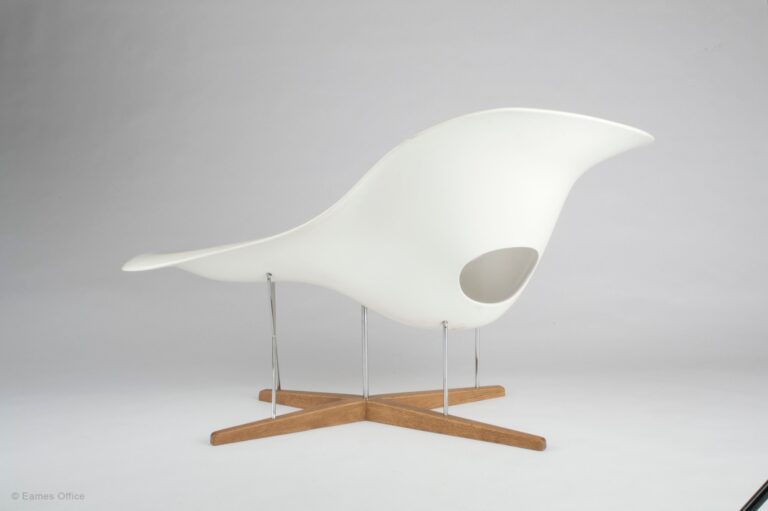
    Charles and Ray designed this lounge chair for The Museum of Modern Art’s 1948 “International Competition for Low-Cost Furniture Design.” Its name references both its function as well as Gaston Lachaise’s Floating Figure sculpture, whose shape the Eameses thought would fit the chair perfectly.  Eames La Chaise The Eames La Chaise was designed In 1948,…

  • OTW

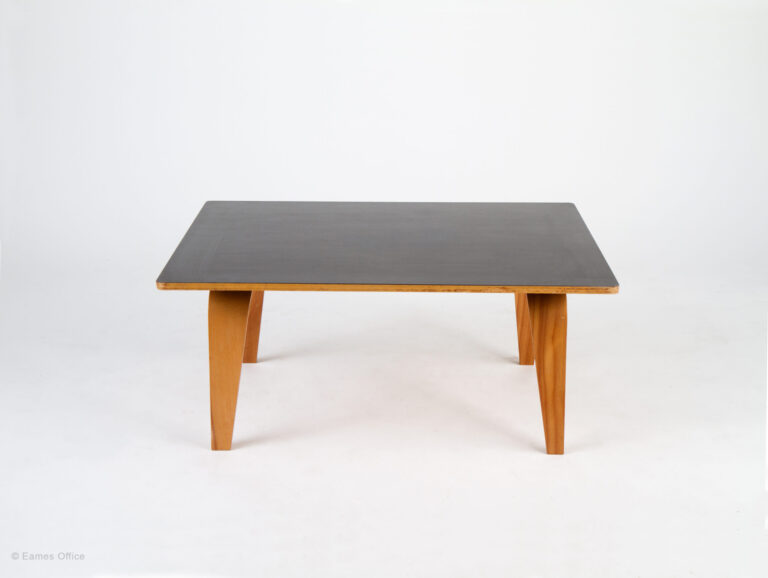
    The OTW, or the Eames Rectangular Table, which we now offer in two different lengths, was developed by Charles and Ray as a product of their process of developing their molded plywood chairs. In fact, when they perfected the bent plywood legs for the Eames LCW, they realized that the back legs of the LCW would…

  • Alcove Sofa

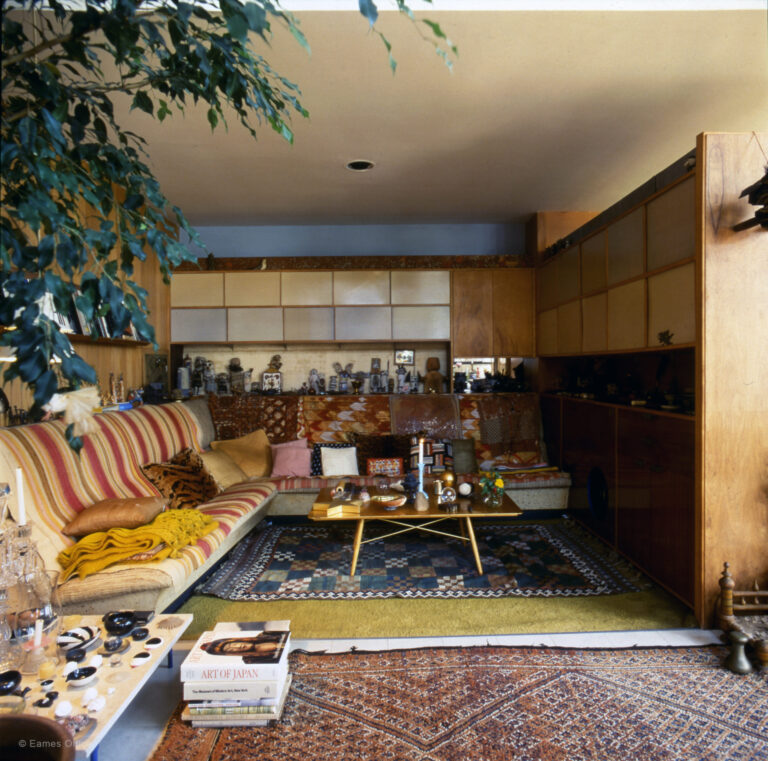
    Visitors to the Eames House can’t fail to notice the L-shaped alcove in the living room. While the living room’s height is 17 feet, the alcove—situated below their second-floor bedroom—has a lower ceiling of only 8 feet, creating a cozy space. This space is not big enough for a standard sofa. For seating in the…

  • THE ALCOVE TABLE

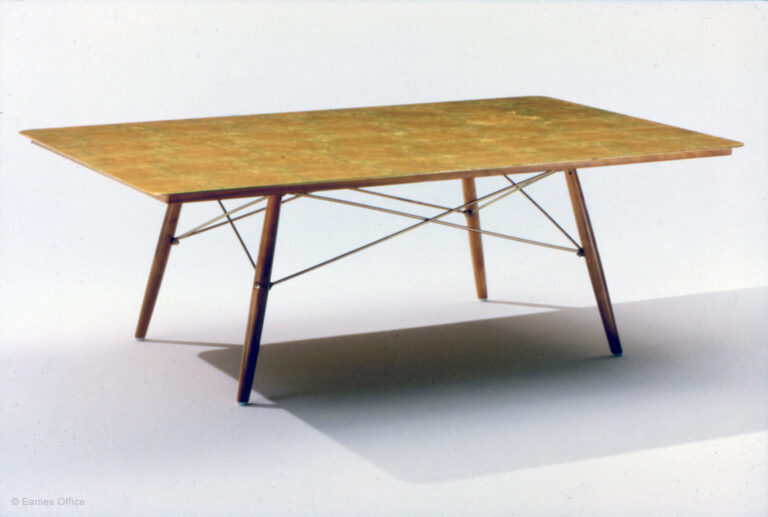
    What we refer to as the Alcove Table was originally site-specific furniture custom-made by Charles and Ray Eames. Now we produce two versions of it, for the general public. The first Alcove Table was made for the Eames House. The base consists of a solid wood dowel leg and steel wire structure, similar to our dowel…

  • Eames Elephant

    Charles and Ray had a soft spot for elephants. In 1945, while they experimented with molding plywood into compound curves, they designed a group of animals for children to sit on. Two prototypes of the elephant were developed and displayed at the Museum of Modern Art in 1946. Eames Elephant During the famed molded plywood…

  • MINIMUM CHAIR

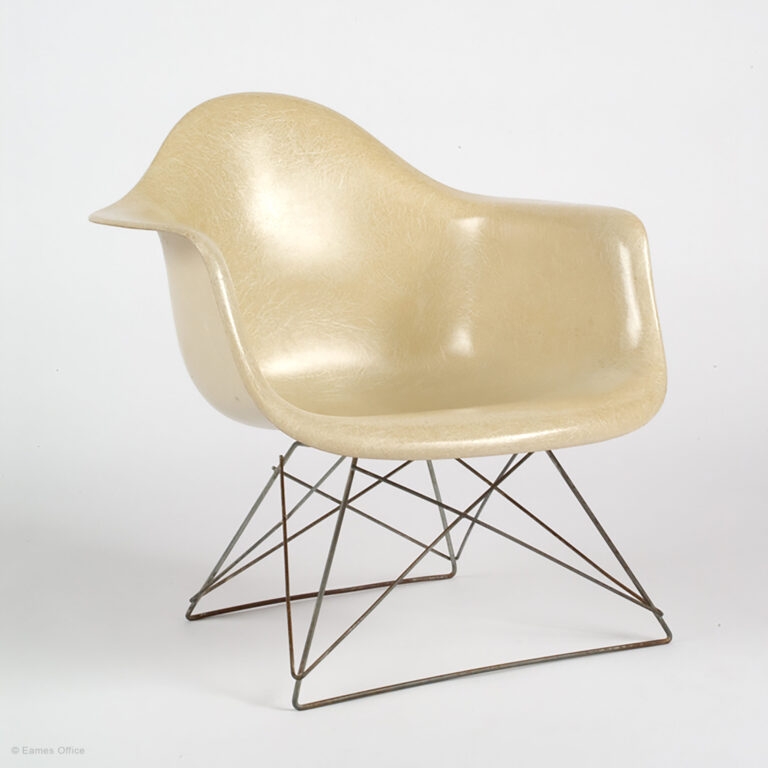
    In 1948, the Museum of Modern Art called for entries in what they at first called “The Low-Cost Furniture Competition.” Ultimately, the Eames Office won second place in the overall competition, with their molded shell chairs with a great and diverse system of bases. In addition to submitting the molded shell chairs, including what eventually…

  • LCM

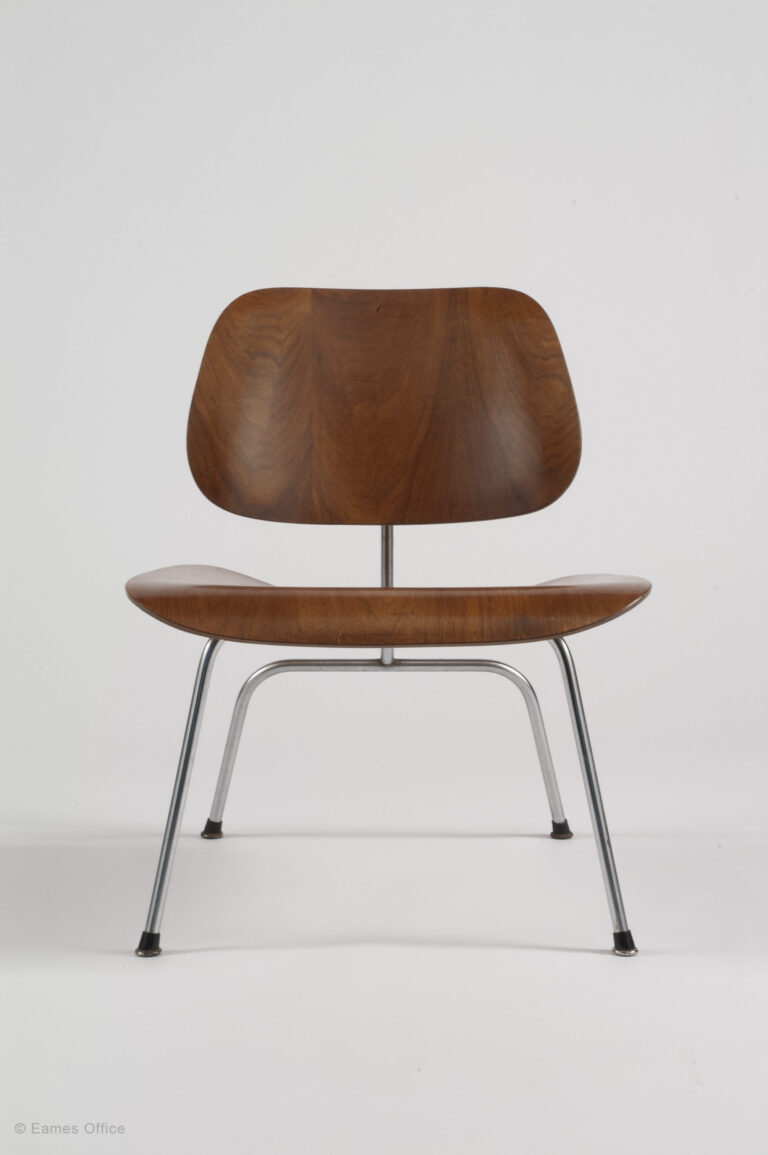
    The LCM, lounge chair wood with metal legs, was developed concurrently with the LCW. Charles and Ray had several key objectives in designing chairs. They wanted them to be reasonably priced, light, and durable. It was also important that they follow the body’s natural contours and flex with a person’s movements.  Eames LCM The Eames…

  • PLYWOOD FOLDING SCREEN

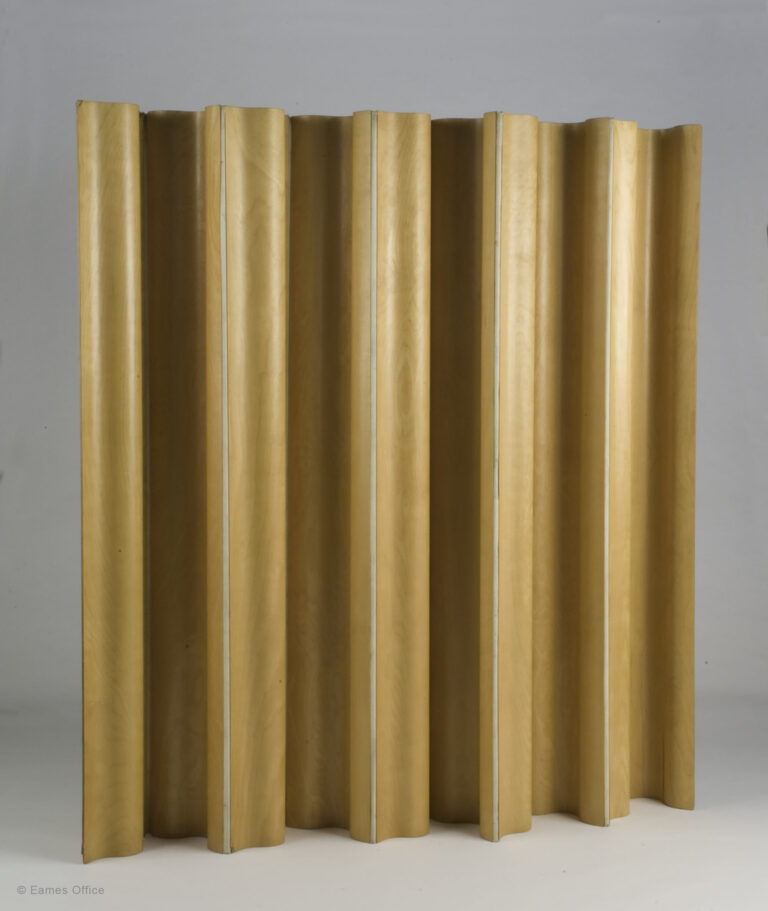
    The Eames Plywood Screen, aka FSW or Folding Screen Wood, had its origins in Charles and Ray Eames’s earliest plywood experiments. The folding screens were made in a variety of premium face wood veneers, in a height of 34 inches, making them suitable as counter screens, keeping children or pets safe and secure, and 68…