
Home » 1960s » Page 4

1960s

  • Image of the City

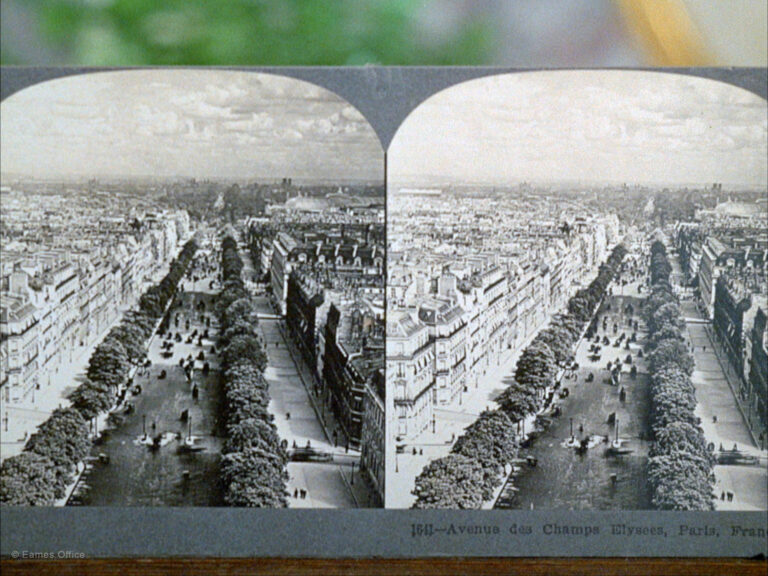
    Using both live-action and still photography, the first part of the film reviews historic photographs and photographic processes. The second part explores contemporary images and new imaging techniques—radar images, thermograms, computer-generated graphics, spectral multiband images, false-color emulsions and satellite observations—from which a variety of information about cities can be derived. 
Music by Gerald Fried.
 15…
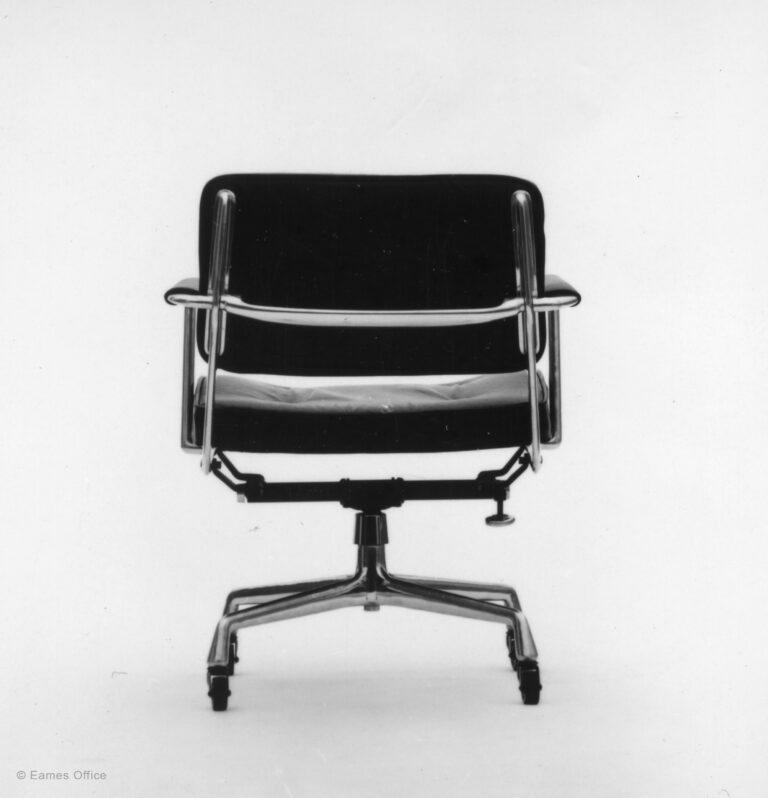
  • INTERMEDIATE CHAIR

    The Eames Office introduced this unique chair in 1968. Available with or without arms and with or without casters, these chairs were designed as good solutions for moderately priced but beautifully detailed executive office seating. Frame, arms, and base are bright polished aluminum. Bright polished arms are furnished with armrests of black leather. Upholsteries are…

  • Kaleidoscope Jazz Chair

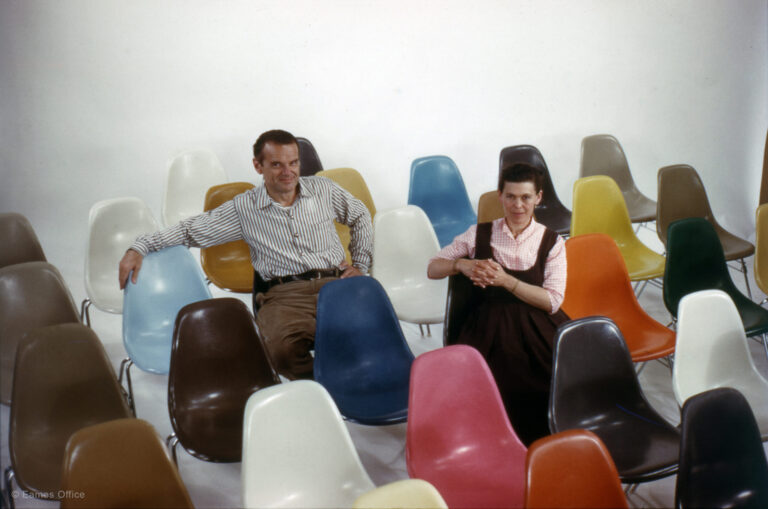
    Photographed through a mirror system to achieve radial kaleidoscopic images, the beginning portion of this film consists of fast-moving kaleidoscopic images of chairs, objects, and materials. In the second half, kaleidoscopic images of the Eames Office dissolve into a sequence of stop-motion shots of Charles and Ray seated in multicolored plastic chairs.
 The music is…

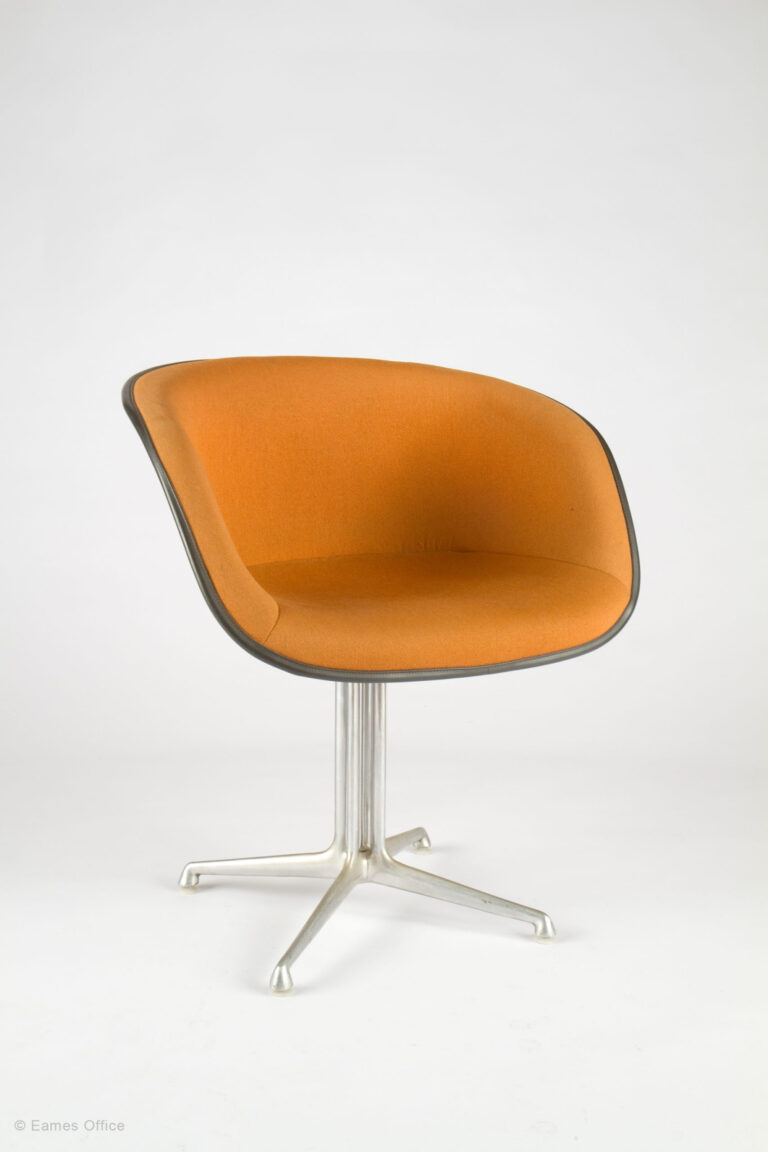
  • LA FONDA ARM CHAIR (1730-1)

    This arm chair is one of two new fiberglass chairs Charles and Ray Eames designed in 1961, inspired by request from Alexander Girard, who needed seating for his new Manhattan restaurant, La Fonda Del Sol. Some collectors call these “La Fonda” chairs after the restaurant where they were first installed.  Eames La Fonda Arm Chair…

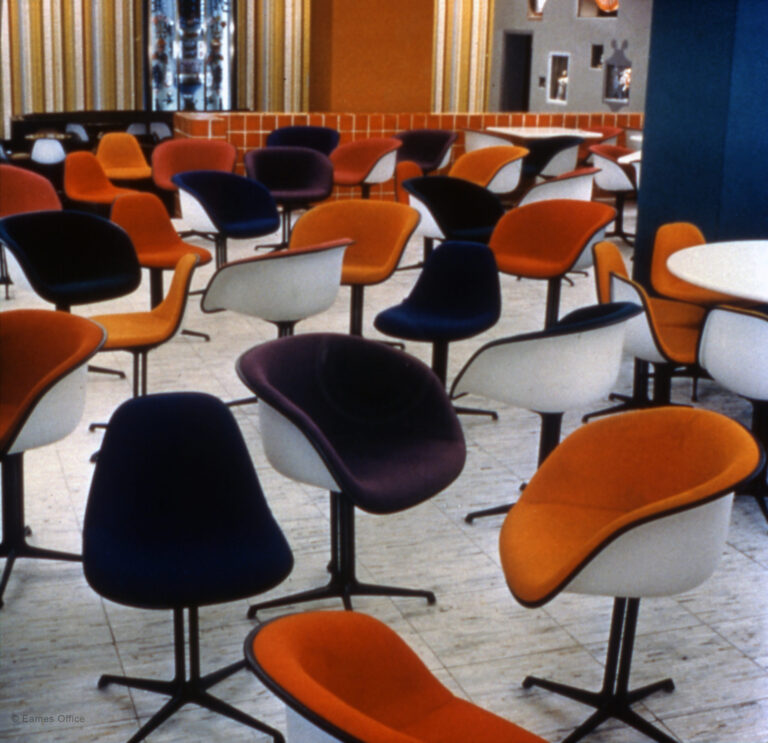
  • LA FONDA GROUP

    Charles and Ray Eames looked for guideposts to ensure they were working on worthwhile projects, worthwhile for themselves personally, and beneficial for society as a whole. One of these guideposts was considering the needs of personal friends. While that was not the only rule concerning the work they did, far from it, it was an…

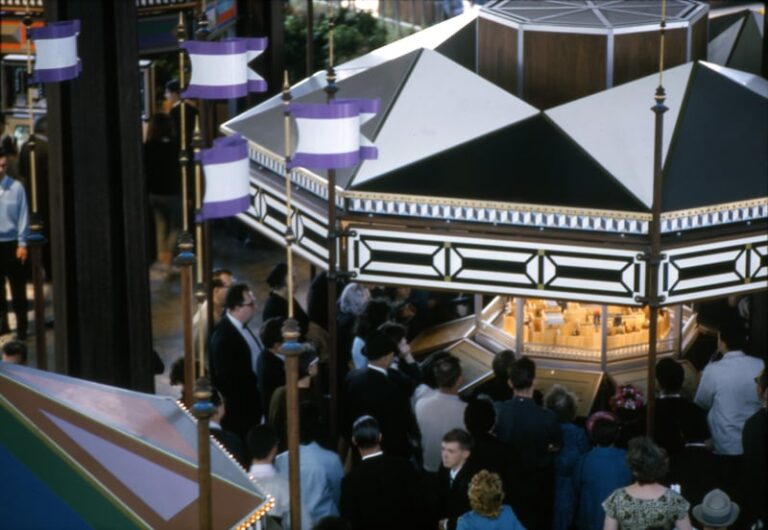
  • IBM Pavilion NY World’s Fair

    The New York World’s Fair (1964-1965) featured 140 pavilions spread over 646 acres of land. It served as a showcase for American companies including IBM, General Electric, Dupont, and Ford. This extravaganza’s theme was “Man’s Achievement on a Shrinking Globe in an Expanding Universe,” which entertained and informed 51 million attendees. Within the fair was…

  • LA FONDA GROUP COFFEE TABLE

    This coffee table base was developed concurrently with the chair base for the Eames La Fonda Group. Like the chair base, it features a clear example of how careful Charles and Ray were in striving for simple, direct solutions to any furniture problem. This table base came out five years after introducing the Eames Contract Base,…

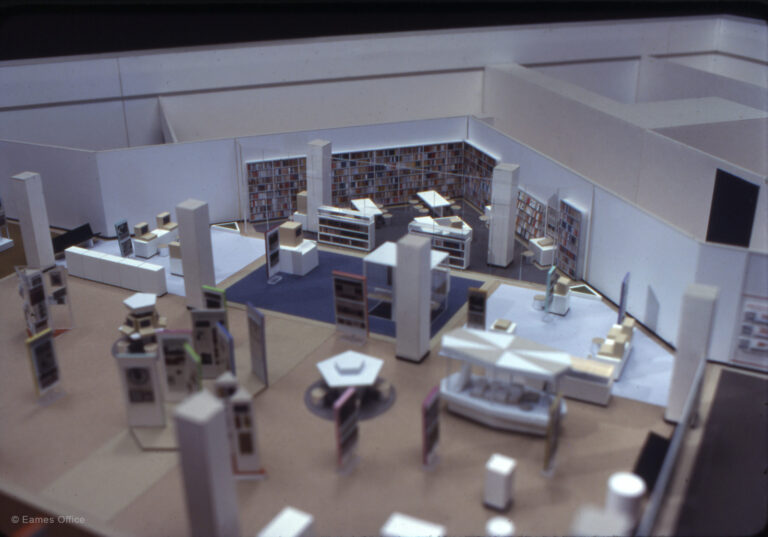
  • IBM Museum proposal

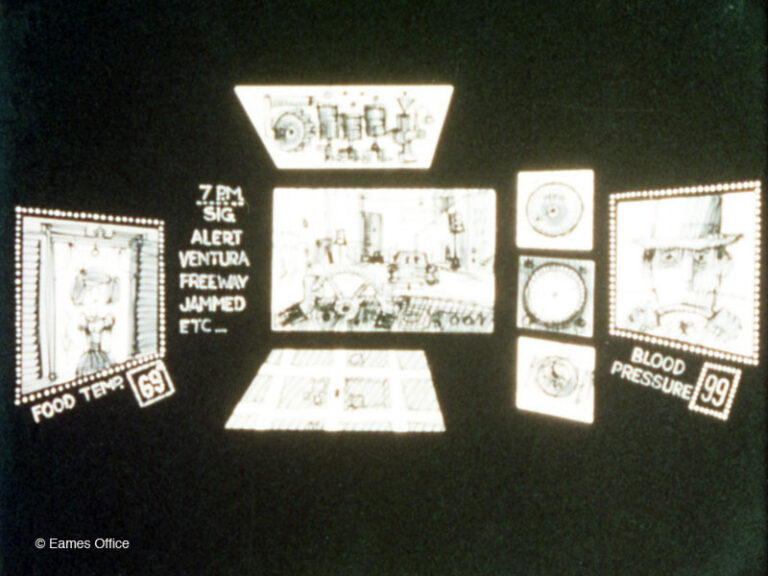
    The Eames Office presented a proposal to IBM for a museum in the form of a film, using animated and live-action sequences, drawings, still photographs, and clips. The goal was to illustrate how the museum could give “a fresh look at those historic objects and events that help place the computer in the terms of…

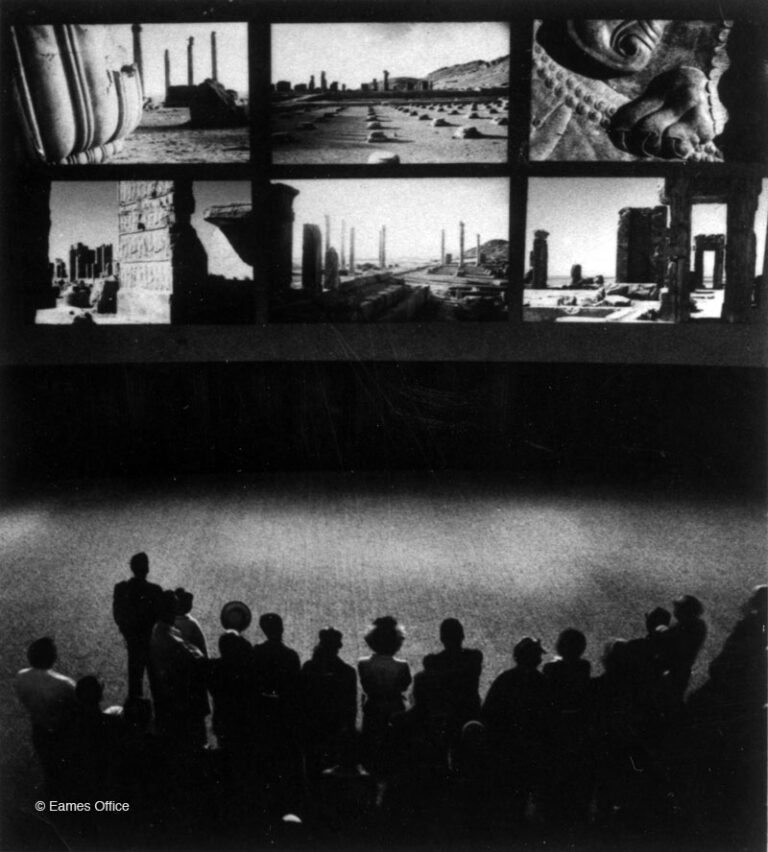
  • House of Science

    A multiscreen film of both animated and photographic sequences, designed to convey “the excitement, the diversity, and the richness of the scientific discipline.” As described by the narration, “Science is essentially an artistic or philosophical enterprise carried on for its own sake. In this, it is more akin to play than to work. But it…

  • IBM Fair Presentation Film #1

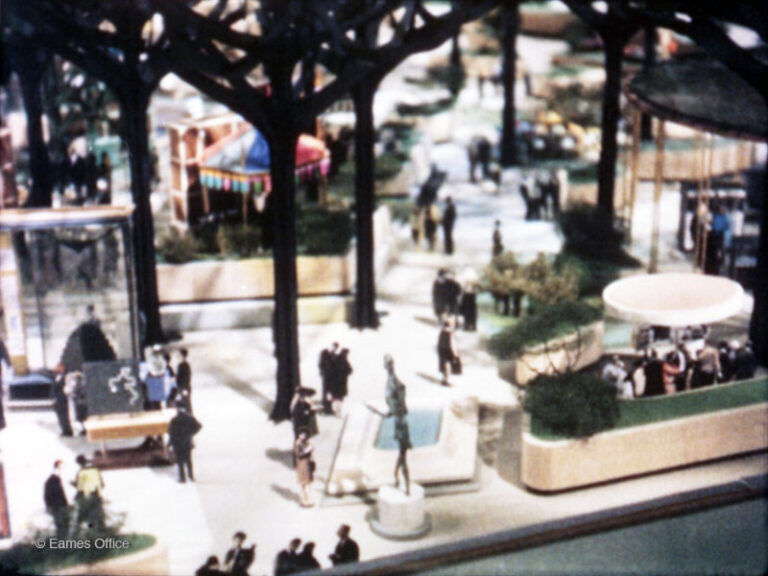
    Created to present the concept, overall architecture, and look of the original proposal for the IBM Pavilion at the 1964-65 New York World’s Fair. Using both photography and animation, the film begins with a view of the actual fair site at Flushing Meadows, New York, and then examines the Eames Office model of the IBM…

  • IBM Fair Presentation Film #2

    A revised version of IBM Presentation Film #1 which details the modifications and additions that were agreed upon. Made after another year’s work on the project, it shows many of the pavilion’s features in greater detail and is a further refinement of the design. 
The music is “A Fine Day,” played by the Chico Hamilton…